Guide · Multi-day
Planning a South Asian wedding in Cancun
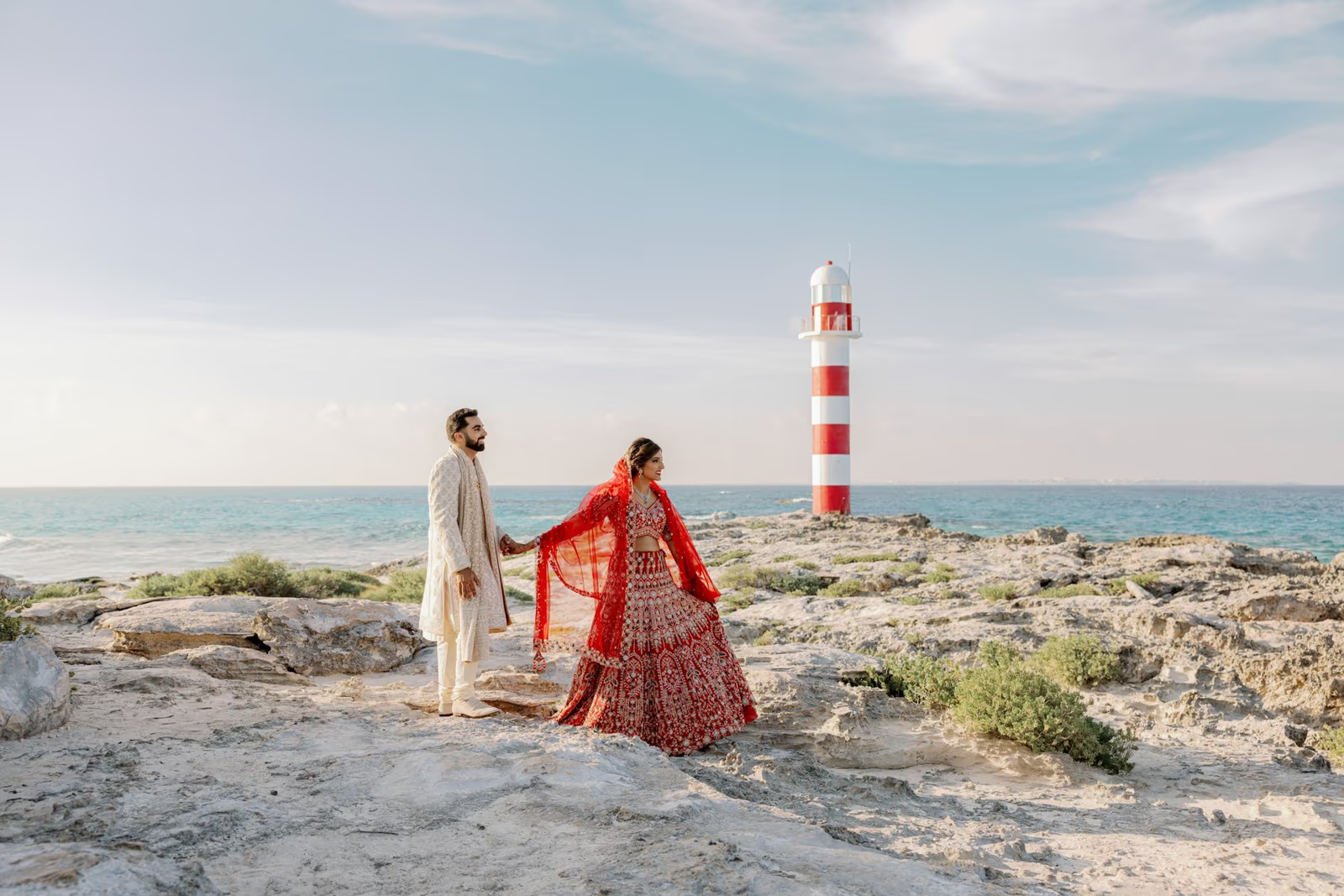
I can speak about this from experience, not from a search: a three-day South Asian celebration I photographed at Hyatt Ziva Cancun, with its real timeline — Mehndi, Pithi, Baraat, Hindu ceremony, Sangeet, a second ceremony and the reception.
A South Asian wedding here is a weekend, not a day. Build the timeline from your families’ program, give the morning events more time than they seem to need, plan the team around what happens at the same time, and ask the resort about fire, the Baraat and catering before you sign.
There is no single order
There isn’t one order for every Indian wedding. It changes with the religion, the region the families come from and the traditions they want to keep. In other weddings the Sangeet happens the night before the main ceremony, and the Mehndi and the Haldi can swap places or be combined. That is why I would never build a timeline from an “Indian wedding” template.
What a destination celebration almost always means is several days, not only a ceremony and a reception.
A real three-day celebration at Hyatt Ziva Cancun
At the South Asian wedding I photographed at Hyatt Ziva Cancun, the program unfolded like this:
- Day one — the Mehndi.
- Day two, morning — the Pithi, which played the role of the Haldi in that celebration.
- Day two, evening — the Baraat, the Hindu ceremony and the Sangeet the same night.
- Day three — a second wedding ceremony, the cocktail hour, the reception, fireworks and an after party.
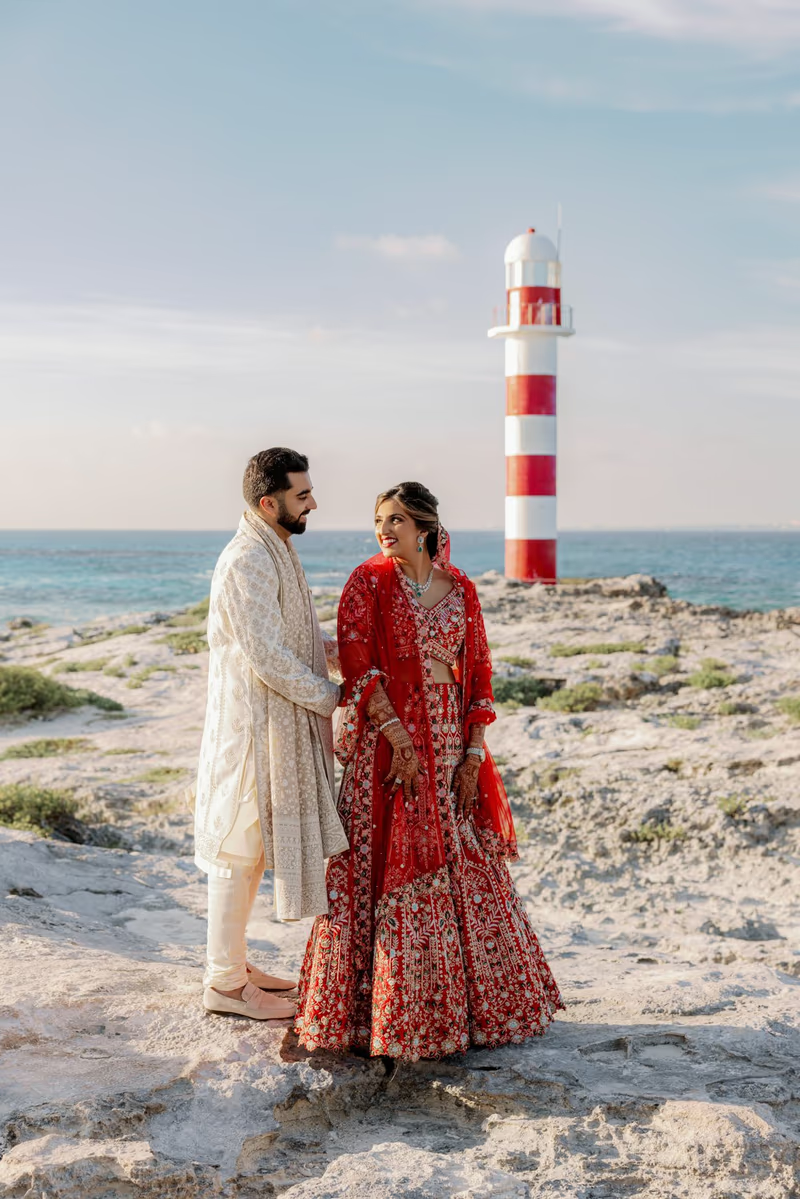
On the second day there was a complete change of look between the morning and the evening. Each event had its own space and its own identity across the resort — the ballroom, the Lighthouse Gazebo, the Sky Terrace, the Cliff Gazebo and the Rooftop Terrace — and the hotel worked alongside a specialised caterer, production, entertainment, photography and film within the same program. The whole celebration is here, in the order it happened.
The event everyone underestimates: the Haldi
Of all of them, the Haldi — or the Pithi — is the one most often underestimated for photography. It looks like a relatively short event, but around the ritual there is getting ready, portraits, the families’ entrances and a great many spontaneous moments.
At Hyatt Ziva, styling began at 6:45 in the morning, photography and film started around 10:00, the Pithi began around 11:15 and that whole part of the day finished around 1:00 in the afternoon. It wasn’t “a one-hour ceremony”. For the photographs, it took the entire morning.
What changes with two or three hundred guests
It changes a lot, and not simply because there are more photographs to take. With eighty guests you can still gather a family quickly, move people from one place to another and find someone during the cocktail hour. With two or three hundred, that stops working.
The first thing that changes is the timeline: more margin between events, and knowing in advance which family groups really matter. I don’t want to be standing in front of the mandap asking who is missing while someone tries to find an uncle among 250 people.
The team changes too — but I wouldn’t add photographers only because the guest list is long. What decides the team is how many important things happen at the same time. In a South Asian wedding the groom can be beginning the Baraat while the bride finishes getting ready, the families wait somewhere else, the mandap is finished and ready to be photographed and hundreds of guests arrive at once. That is when splitting the coverage makes sense.
With the family portraits I am far more structured. We prepare the main combinations before the wedding and usually start with the largest groups, so people are released as we go.
The difference between a wedding of eighty and one of three hundred isn’t only volume. It is logistics.
The muhurat and the Baraat
The ceremony happens when it has to happen. I would never try to move a muhurat just to get better sunset light. What I move is the photography around it.
If the ceremony falls at an hour with very strong light, that doesn’t mean the couple portraits have to happen then too. I can do a first session before, use the resort’s architecture, shade and interiors during the hardest hours, and keep another window afterwards for the most editorial portraits. For every other event, the sunset on your date still tells us where the best light is.
The Baraat needs a different strategy because it moves. I need to know where it starts, which way it goes and exactly where it ends before it begins — I don’t want to discover the route while I am photographing it. At Hyatt Ziva the Baraat began around 5:45 in the evening, the bride’s family received the groom’s family around 6:00 and the Hindu ceremony followed. That schedule worked beautifully with the light, but I wouldn’t assume the next wedding will have the same muhurat.
First I respect the ceremony. Then I build the best possible windows for photography around it.
What families ask for most
I definitely see more emphasis on family, and on the number of important photographs. Group portraits carry a lot of weight: not only parents and siblings, but extended families, different branches of both families and people who travelled from several countries to be there. At one celebration there were even set moments during different events for the couple to be photographed with their guests.
I have also had South Asian couples ask specifically for a larger number of retouched photographs — one bride asked what it would take to have every photograph retouched instead of only the selection included in her collection. That says a lot about how they value the complete archive of the weekend. What I wouldn’t say is that every family wants faster delivery or an album; I haven’t seen that consistently enough to claim it.
What to ask the resort before you sign
For a South Asian wedding I would ask these questions before signing the contract, not six months later. An Indian wedding can have five, six or more events in two or three days: the resort doesn’t only need a beautiful place for a ceremony, it needs to handle the logistics of the whole weekend.
- The ceremonial fire. If there will be a havan or any flame in the mandap, confirm exactly where the hotel allows it and under which conditions. A space used for weddings doesn’t automatically allow an open flame.
- The Baraat. The permitted route, the duration, the music, the dhol and speakers, and any vehicle, horse or other element you want to include.
- The catering. Whether an outside Indian caterer is allowed, whether they can use a hotel kitchen, what equipment can come in and how the service will work alongside the resort’s.
- The curfew for music and the reception, and whether an after party can continue afterwards.
- Cold fireworks or fireworks.
- Outside vendor fees and access for external teams — set by the resort, so ask the coordinator in writing.
- Set-up and breakdown time between the Mehndi, the Haldi or Pithi, the Sangeet and the ceremony.
- Spaces to change between events, for the couple and the families.
- The rain plan for the mandap and for the Baraat.
- Storage for decoration and outfits across the days.
Where to go from here
South Asian weddings shows how I photograph these celebrations, chapter by chapter, and how the coverage of a celebration like this one is built. For the weekend around any wedding, see the wedding weekend. And when you're ready, tell me about yours.
The celebration at Hyatt Ziva Cancun
Questions couples ask
What events does a South Asian wedding in Cancun usually include?
There is no single order: it depends on the religion, the region of the families and the traditions they want to keep. A destination celebration usually runs across several days — for example a Mehndi, a Haldi or Pithi, the Baraat, the ceremony, a Sangeet and a reception. The timeline is built from your families’ program, never from a template.
How long does an Indian wedding last?
At a destination, usually two or three days. It depends on how many events the families keep and how they group them: the Mehndi, the Haldi or Pithi, the Sangeet, the Baraat, the ceremony and the reception can fit into two days or spread across three. The celebration I photographed at Hyatt Ziva Cancun took three.
How many photographers do we need for a 250-guest Indian wedding?
The guest count alone doesn’t decide it. What decides it is how many important things happen at the same time — the groom beginning the Baraat while the bride finishes getting ready, the families waiting elsewhere, the mandap ready to be photographed. When that happens, splitting the coverage makes real sense.
What if our muhurat falls in harsh midday light?
The ceremony happens when it has to happen; I would never move a muhurat for better light. What moves is the photography around it: a first session before, shade, architecture and interiors during the difficult hours, and another window later for the portraits.
Which resorts in Cancun can host a multi-day Indian wedding?
The one I can speak for from direct experience is Hyatt Ziva Cancun, where I photographed a complete three-day celebration. For any other resort, ask it the questions on this page — fire, the Baraat route, catering, curfews, set-up time between events — before you sign.
Can we have a havan or a fire ceremony at the resort?
Ask the resort exactly where it allows an open flame inside the mandap and under which conditions, and get the answer in writing before you sign. A space that hosts weddings does not automatically allow fire.
More guides
Planning your celebration?
Tell me about the events, the days and the families. I'll tell you how I would build the photography around them.